

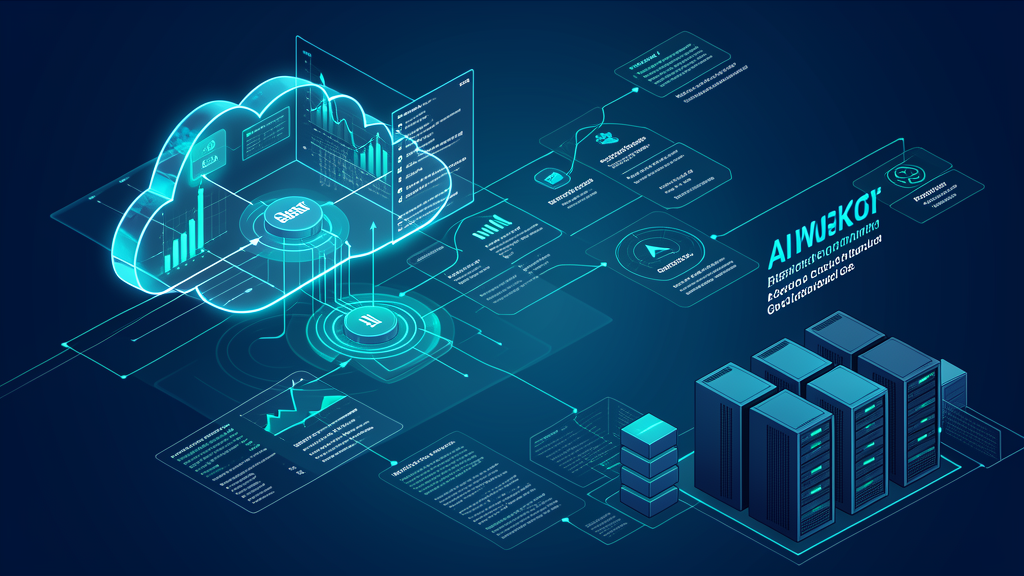
AI has moved from pilot projects into production services, and that shift is rewriting cloud economics. Training runs, inference, retrieval, vector storage, data movement, logging, and governance controls all contribute to a bill that is harder to predict than traditional infrastructure spend.
That is why cloud cost optimization is no longer a back-office cleanup exercise. In 2026, it is becoming an executive governance issue. FinOps conversations are expanding beyond virtual machines and storage tiers to include AI workloads, vendor model usage, and the operational controls needed to keep spending defensible.
For enterprise leaders, the real question is not whether AI will raise cloud spend. It already does. The question is whether finance, IT, security, and application owners can see and control that spend before growth turns into budget friction.
Why the shift matters now
Traditional cloud optimization assumes relatively stable consumption patterns. AI workloads rarely behave that way. A single product launch, internal assistant rollout, or customer-support use case can create sudden changes in compute demand, token consumption, and data retrieval volume.
- Usage is variable. Inference and API calls can rise sharply when adoption increases or when prompts become more complex.
- Costs are distributed. Spend may show up in multiple places: cloud compute, storage, network transfer, managed AI services, and SaaS contracts.
- Governance requirements add overhead. Security logging, retention policies, regional controls, and access reviews can all affect the final cost picture.
What enterprises are seeing in practice
The most common pattern is not a single runaway project. It is a collection of small decisions that add up quickly:
1. Separate teams buy similar capabilities twice
One business unit deploys a customer-facing copilot, while another launches an internal knowledge assistant. Each team chooses its own model, retrieval stack, and hosting approach. The result is duplicated spend and inconsistent governance.
2. AI features scale faster than the budget model
A feature that looks inexpensive in pilot form can become expensive after adoption. Inference requests, retries, prompt length, and document retrieval all scale with usage. If pricing assumptions were built around a small test cohort, production economics can drift quickly.
3. Data movement creates hidden costs
Hybrid and multi-cloud architectures can make AI more flexible, but they can also introduce data transfer charges, regional complexity, and latency tradeoffs. The cost is not always in the AI model itself; sometimes it is in the path the data takes to reach it.
Why finance and IT both care
AI spend is one of the few technology categories that can affect margin, customer experience, and risk controls at the same time. That makes it an executive issue rather than a technical side project.
- Finance needs forecastable usage, clearer allocation, and a defensible business case for every major workload.
- IT needs standard platforms, predictable performance, and the ability to control sprawl.
- Security and compliance need traceability around where data is processed, stored, and retrieved.
- Operations leaders need controls that scale without slowing delivery or creating approval bottlenecks.
Risks of ignoring AI FinOps
- Budget surprises. Small pilot projects can become large recurring line items before leadership realizes the cost curve has changed.
- Shadow AI. When internal teams cannot get a fast, governed path to production, they often buy tools outside the central process.
- Poor unit economics. A feature can look innovative while quietly destroying margin if cost per interaction is never measured.
- Vendor lock-in. Teams that optimize for speed first may discover later that they have no leverage on pricing, portability, or architecture.
- Control drift. As more teams deploy AI, policy exceptions can accumulate until no one has a clean view of who owns what.
What a mature control model looks like
Enterprises that are ahead of the curve are treating AI cost management as a governed operating model, not a one-time cleanup project.
- Create an AI workload inventory. Map every model, API, hosting layer, data source, and business owner.
- Separate experimentation from production. Use lower-cost environments and time-boxed trials so pilots do not inherit production spend forever.
- Track unit economics. Measure cost per conversation, cost per document processed, cost per case resolved, or whatever unit best reflects the business outcome.
- Standardize model selection. Not every use case needs the most expensive model. Define tiers for summarization, retrieval, classification, and high-accuracy reasoning.
- Enforce tagging and chargeback. If a team cannot attribute cost to a service, feature, or business unit, it will be difficult to optimize responsibly.
- Build budget guardrails into approvals. Procurement, security, and platform teams should review new AI services before they create recurring cost exposure.
Traditional cloud cost management vs. AI workload FinOps
| Area | Traditional cloud cost management | AI workload FinOps |
|---|---|---|
| Cost pattern | Relatively stable compute and storage trends | Variable demand driven by usage, prompts, tokens, and retrieval volume |
| Ownership | Mostly infrastructure or platform teams | Shared ownership across finance, IT, security, and product teams |
| Monitoring | Monthly cloud bills and utilization reports | Near-real-time usage, unit economics, and business outcome tracking |
| Control focus | Rightsizing, reservations, and storage cleanup | Model selection, prompt efficiency, caching, governance, and data locality |
| Executive reporting | Spend by environment or business unit | Spend by use case, service line, and measurable outcome |
Enterprise readiness checklist
- Do we know which AI workloads are in pilot, limited release, and production?
- Can we show cost by use case, business owner, and model type?
- Have we defined a minimum viable governance process for new AI tools?
- Are prompts, retrieval layers, and caching being optimized before scale?
- Do we have approval thresholds for usage spikes and capacity changes?
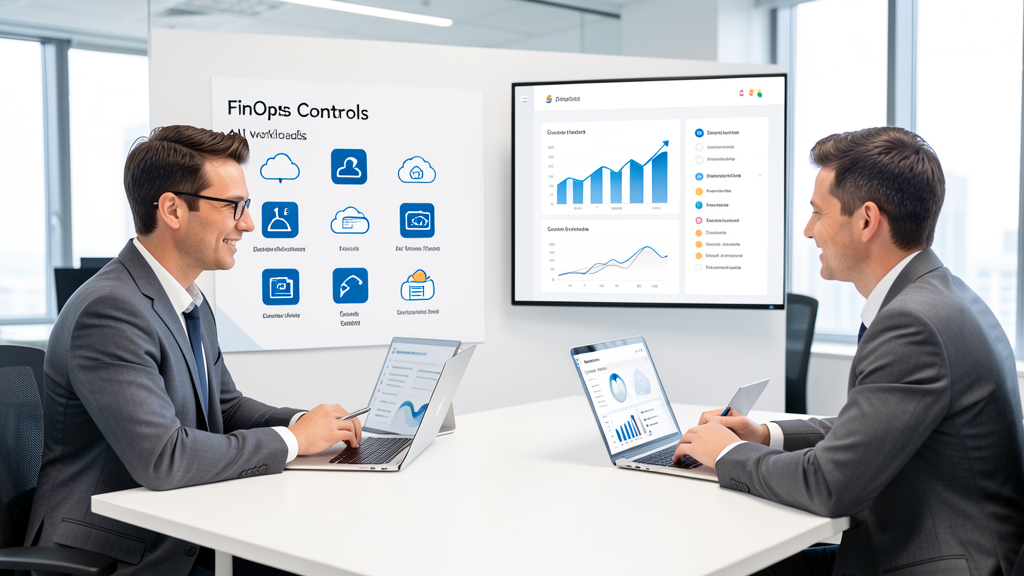
- Can finance and IT review the same dashboard instead of reconciling separate reports?
- Are regional, retention, and logging requirements included in the cost model?
- Do we have an exit plan if a vendor’s pricing or packaging changes?
Key takeaway: AI spend should be managed like a governed product line, not like an incidental cloud expense. The organizations that win will be the ones that make usage visible early, control it consistently, and connect every dollar to a business outcome.
How QuickMSP helps
QuickMSP helps enterprises bring cloud and AI spending under control without slowing delivery. That means identifying where costs are really coming from, tightening governance around new AI initiatives, and building the reporting structure leaders need to make better decisions.
If your organization is expanding AI usage, now is the right time to review the economics before scale turns into surprise. QuickMSP can help you build a practical FinOps framework for AI workloads, align it with security and compliance requirements, and keep the business moving with fewer budget shocks.
Ready to make AI cloud spend more predictable? Talk to QuickMSP about a governance-first cloud cost review and see where your AI workload economics can improve.