
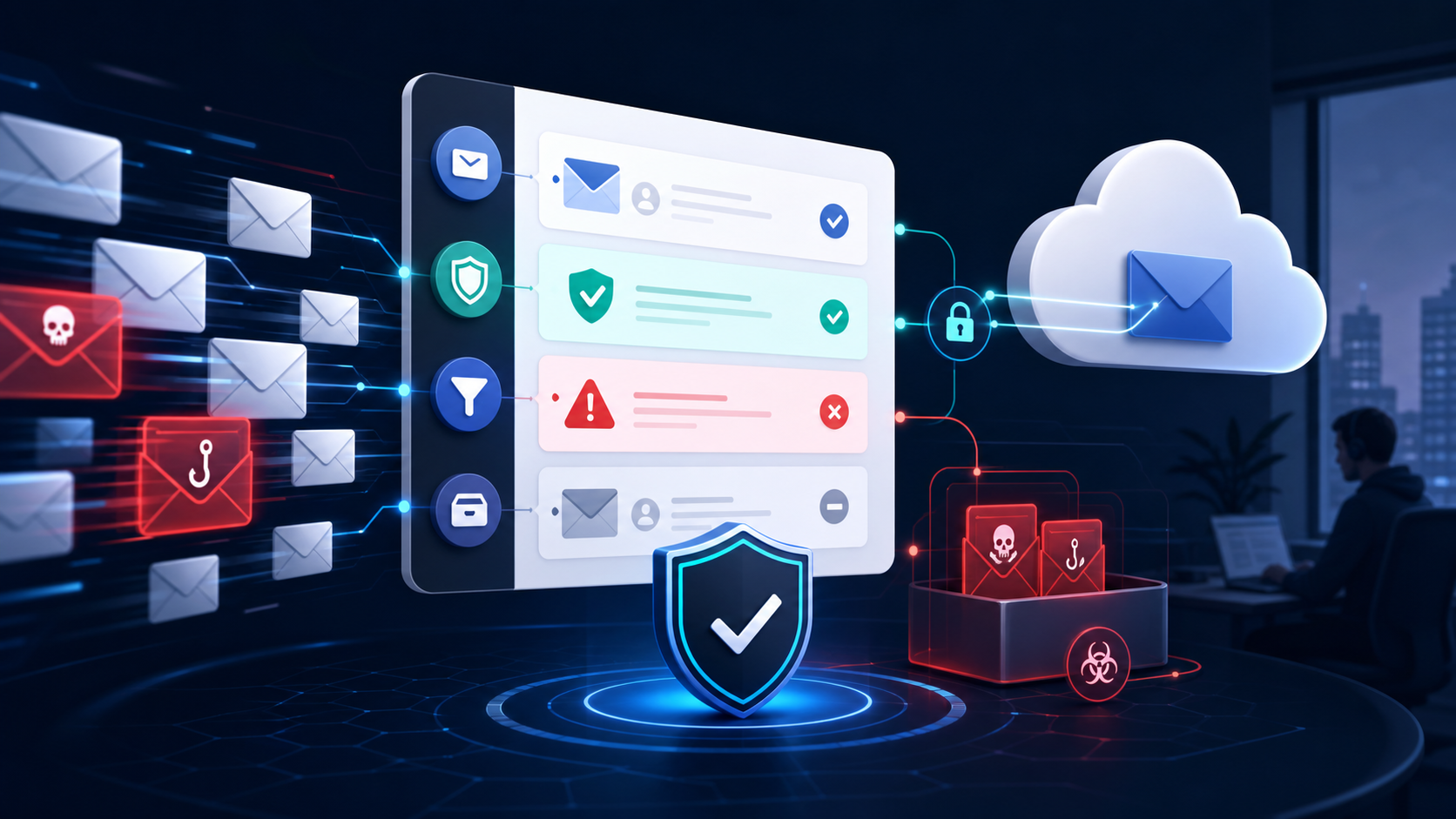
A newly reported campaign exploiting a Zimbra Collaboration Suite vulnerability is a sharp reminder that modern phishing does not always need an attachment, a link, or malware dropped to disk. In the latest case, attackers reportedly embedded malicious code directly inside an HTML email body, turning a routine inbox action into a potential mailbox takeover.
The latest threat in focus
According to The Hacker News , citing CISA and Seqrite Labs, threat actors exploited CVE-2025-66376 , a stored cross-site scripting vulnerability affecting the Classic UI of Zimbra Collaboration Suite. The campaign, dubbed Operation GhostMail , reportedly targeted a Ukrainian government organization using a socially engineered email crafted to look harmless at first glance.
What makes this campaign notable is how little it needed to look suspicious. The attack chain reportedly lived inside the HTML body of a single email. No dangerous attachment. No macro prompt. No obvious payload for users to download.
Why this matters
Many organizations still think of email attacks in old terms: suspicious attachments, fake invoice PDFs, or malicious links. But attacks against webmail platforms have evolved. If a threat actor can exploit the mail interface itself, simply opening a message in a vulnerable environment may be enough to expose critical data.
In the reporting on Operation GhostMail, the JavaScript-based payload was described as capable of stealing:
- user credentials
- active session tokens
- backup two-factor recovery codes
- browser-saved passwords
- mailbox contents going back roughly 90 days
That is a serious business risk. Once a mailbox is compromised, the attacker may gain access to internal conversations, invoice threads, executive communications, password reset flows, and customer or partner messages. From there, the incident can escalate into account takeover, fraud, lateral movement, or broader compromise.
Why Zimbra remains attractive to attackers
Webmail systems sit in a high-trust position. They are always in use, tied to identity, and full of sensitive information. That makes them ideal targets for attackers who want a quiet entry point.
In this case, the reported method is especially dangerous because it relies on browser-resident theft rather than traditional malware binaries. That means some security teams may miss the early stages if they rely too heavily on endpoint detections alone. If the browser session is the attack surface, defenders need patching, server visibility, email-layer controls, and strong identity protections working together.
What business leaders should take away
- Email security is no longer just a user-awareness issue. Secure user behavior still matters, but platform patching and webmail hardening matter just as much.
- “No attachment” does not mean “low risk.” Threats embedded in HTML and browser logic can be just as damaging as downloaded malware.
- Mailbox compromise can become a business operations problem fast. Finance, HR, sales, and leadership teams all rely on email for trusted decisions.
What organizations should do now
- Patch Zimbra immediately if any vulnerable systems are still in use.
- Review whether the Classic UI is exposed and limit unnecessary attack surface wherever possible.
- Inspect mailbox and authentication logs for unusual session behavior, suspicious access patterns, or abnormal data access.
- Audit privileged and executive mailboxes first , since they often create the highest downstream risk.
- Rotate credentials and review MFA recovery options if compromise is suspected.
- Harden browser and identity controls to reduce the impact of session theft.
- Train employees and admins to understand that a dangerous message may not include any attachment at all.
QuickMSP insight
Operation GhostMail is a good example of how attackers keep adapting to evade older detection habits. Businesses that focus only on antivirus, attachment filtering, or obvious phishing indicators are leaving a gap open. Today’s inbox threats can abuse the application layer itself, making patch discipline, account monitoring, and incident readiness far more important than many organizations realize.
At QuickMSP, we help businesses reduce that exposure through proactive patching, identity protection, continuous monitoring, and practical incident response support. When the attack path is hidden inside a trusted workflow like webmail, speed and visibility make the difference.
Source referenced: CISA- and Seqrite-linked reporting summarized by The Hacker News .