

Why Enterprise AI Agent Inventory Is Becoming a Control-Plane Requirement in 2026
Microsoft Build 2026 made a clear point: AI agents are no longer experimental side projects. With Microsoft’s Agent 365 now generally available and new controls for context mapping, policy enforcement, runtime blocking, and alerts arriving in the stack, enterprises are being pushed toward a new operating model. The question is no longer whether teams will use agents. The question is whether the business can inventory them, govern them, and prove they are safe.
That shift matters because the old software governance model was built for apps, licenses, and users. AI agents behave differently. They can act on behalf of employees, call tools, access repositories, read messages, move data, and trigger workflows. In other words, they are not just software to be installed; they are software to be managed as actors. For enterprise leaders, that turns agent inventory into a control-plane problem, not a lab exercise.
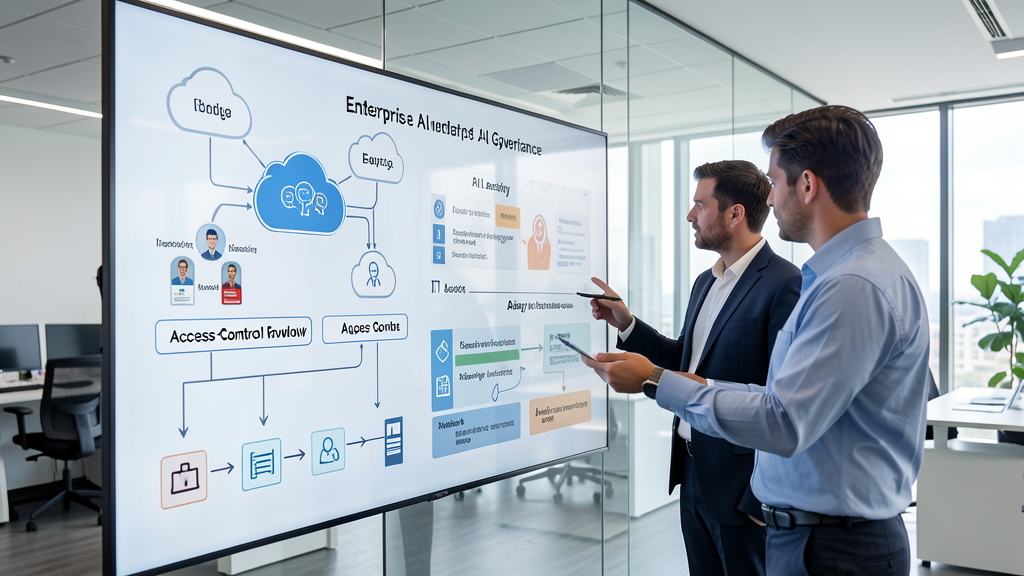
What changed in 2026
The market is moving away from isolated copilots and toward agentic workflows that can perform multi-step work. That creates a new governance burden. A single employee might use a browser-based agent for research, a line-of-business team might deploy an internal support bot, and an MSP or developer team might wire an automation into ticketing, storage, and identity platforms. Individually, each use case may look harmless. Collectively, they create a fragmented permissions landscape that most enterprises are not prepared to track.
Microsoft’s recent announcements are important because they reflect where the market is headed: visibility first, then policy, then runtime enforcement. That is the same sequence enterprises used for identity, endpoint management, and cloud access. AI agents now need the same discipline.
Why enterprises should care now
AI agent sprawl is not just an innovation issue. It is an operational, financial, and compliance issue. When an agent has persistent access to a mailbox, document library, CRM, finance workflow, or support queue, the risk is not limited to unauthorized access. The risk also includes accidental disclosure, over-collection of data, hidden dependencies, and workflow changes that no one notices until an audit, incident, or business interruption reveals them.
Enterprise leaders should be concerned for four reasons:
- Identity risk: agents often inherit permissions from the human or service account that created them.
- Data risk: an agent that can read broadly can also leak broadly, even if unintentionally.
- Operational risk: an automation can become a single point of failure if nobody owns it.
- Compliance risk: the business may not be able to explain who approved the agent, what it touched, or why it still exists.
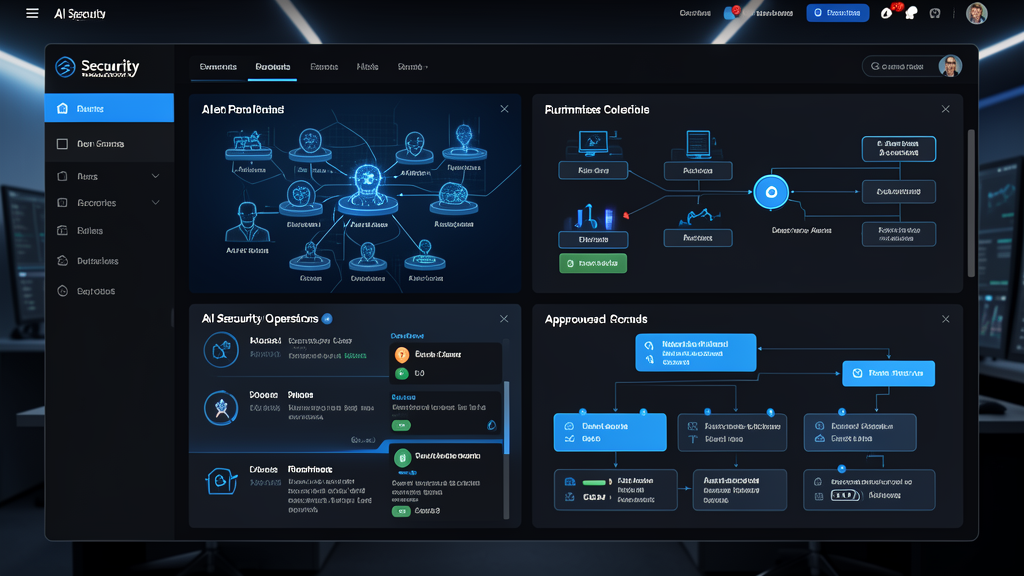
Where the control gap appears
Most enterprises already have tooling for user accounts, endpoints, and cloud apps. The gap is that AI agents sit across all three domains. They may be created in one team, approved by another, and operated by a third. The result is governance drift: the business knows the tool exists, but not the full blast radius.
| Control area | Traditional software governance | AI agent governance |
|---|---|---|
| Discovery | Track licensed applications and assigned users | Track every agent, connector, model, and service identity |
| Approval | Annual software review or procurement approval | Use-case approval, scope approval, and owner assignment |
| Access | SSO, MFA, and role-based access | Scoped actions, least privilege, and data boundary controls |
| Monitoring | Login events and app usage | Prompt flow, tool calls, runtime alerts, and abnormal actions |
| Retirement | Disable license or uninstall software | Revoke credentials, disconnect tools, preserve evidence, and decommission workflows |
Best practices for building an inventory-first model
An effective governance model does not start with a ban. It starts with visibility. Enterprises that want AI adoption without chaos should focus on the following steps:
- Inventory every agent and connector. Include internal automations, vendor copilots, browser agents, and workflow bots.
- Assign a named owner. Every agent should have a business owner, a technical owner, and an approval trail.
- Classify data access. Document which systems, records, and identities each agent can access.
- Reduce permissions aggressively. If an agent only needs read access, do not give it write access.
- Log and alert on runtime behavior. Watch for unusual tool usage, data movement, and action chains.
- Define retirement procedures. An abandoned agent is still an access path.
That framework is not about slowing AI down. It is about making adoption durable enough for finance, legal, security, and operations to sign off on it with confidence.
Enterprise checklist for the next 30 days
- Build a single inventory of all known AI agents and automations.
- Review privileged service accounts and token-based connectors tied to those agents.
- Document each agent’s data sources, actions, and downstream systems.
- Require human approval for high-risk workflow changes.
- Establish a rollback or kill-switch process for every production agent.
- Include AI agents in incident response and offboarding procedures.
Key takeaway: If the business cannot answer “What agents exist, what can they access, and who approved them?” it does not yet have AI governance — it has shadow automation.
How QuickMSP fits into the operating model
QuickMSP is well positioned to help enterprises move from AI enthusiasm to controlled execution. The practical work is not just enabling tools; it is aligning identity, access, monitoring, and process ownership so the organization can use AI without creating blind spots. That includes inventorying connected services, tightening permissions, documenting approvals, and building a repeatable control framework that business leaders can trust.
For organizations that are piloting copilots, deploying task agents, or connecting AI to internal workflows, this is the right time to create a governance baseline. The longer enterprises wait, the more shadow AI accumulates, and the harder it becomes to map risk back to a responsible owner.
Bottom line: AI agents are becoming part of the enterprise operating environment. The winners will not be the companies that deploy the most of them first. The winners will be the companies that can inventory them, govern them, and prove they are safe to scale.
Need help turning AI adoption into a controlled enterprise rollout? QuickMSP can help your team design the inventory, access, and monitoring model needed to make AI governance operational.