
The certificate landscape is changing faster than most IT teams are accustomed to. With the CA/B Forum driving public TLS certificates toward shorter validity windows—starting with the first reduction in 2026 and ultimately reaching 47-day validity by 2029—renewals stop being an annual maintenance task and become a continuous operational control. For enterprises, that is more than a technical housekeeping issue. Certificates front customer portals, internal applications, APIs, VPNs, load balancers, and SaaS integrations. When they expire, revenue, trust, and productivity can stop with them.
The hidden cost is not only the certificate itself. It is the change coordination, the manual tracking, the risk of missed dependencies, and the operational drag that comes from treating certificate renewal as a ticket instead of a lifecycle. That is why SSL lifecycle automation is moving from “nice to have” to “enterprise control.”
Key takeaway: Shorter TLS lifetimes turn certificate management into a business continuity issue. Enterprises that automate now reduce outage risk, improve auditability, and avoid a future scramble when renewal windows shrink again.

Why the change matters now
For years, many organizations got away with annual or semi-annual certificate renewals because the cadence was slow enough for humans to manage it manually. That model is breaking. Shorter validity windows compress the margin for error, and they expose the weak spots that enterprises often overlook: certificates owned by different teams, certificates embedded in vendor appliances, and certificates tied to applications that do not have a clear technical owner.
This is especially important for organizations with hybrid infrastructure. A single enterprise may now manage certificates across customer-facing websites, internal web apps, reverse proxies, Kubernetes ingress controllers, API gateways, VPN concentrators, and third-party services. If each environment follows a different renewal process, the organization does not have one certificate policy. It has a collection of exceptions.
The current market shift makes those exceptions expensive. As certificate lifetimes shorten, the operational model has to shift with them. The question is no longer whether your team can renew a certificate. It is whether your organization can renew hundreds of certificates repeatedly, reliably, and with enough visibility to prevent a production incident.
What enterprises risk by staying manual
Manual renewal processes fail for predictable reasons. Someone is on vacation. A ticket gets buried. DNS validation is handled by a different team. The application owner assumes the infrastructure team is watching expiration dates. Meanwhile, the old certificate quietly approaches expiry in a system that still matters to customers or employees.
- Outages and service interruption: expired certificates can break customer portals, internal apps, APIs, and authentication flows.
- Support load spikes: help desks get flooded when users see trust errors or cannot reach critical systems.
- Revenue impact: an expiry on a checkout page, partner API, or login gateway can quickly become a commercial problem.
- Audit and governance gaps: manual exceptions are hard to document and harder to prove under review.
- Shadow dependency risk: forgotten subdomains, test endpoints, and vendor-managed certificates often become the failure point.
Enterprise leaders should also think beyond the public website. In many organizations, the most dangerous certificate failure is not a headline service. It is a certificate buried in an edge appliance, load balancer, or authentication layer that everyone assumes “just works.”
The enterprise response: automate the full certificate lifecycle
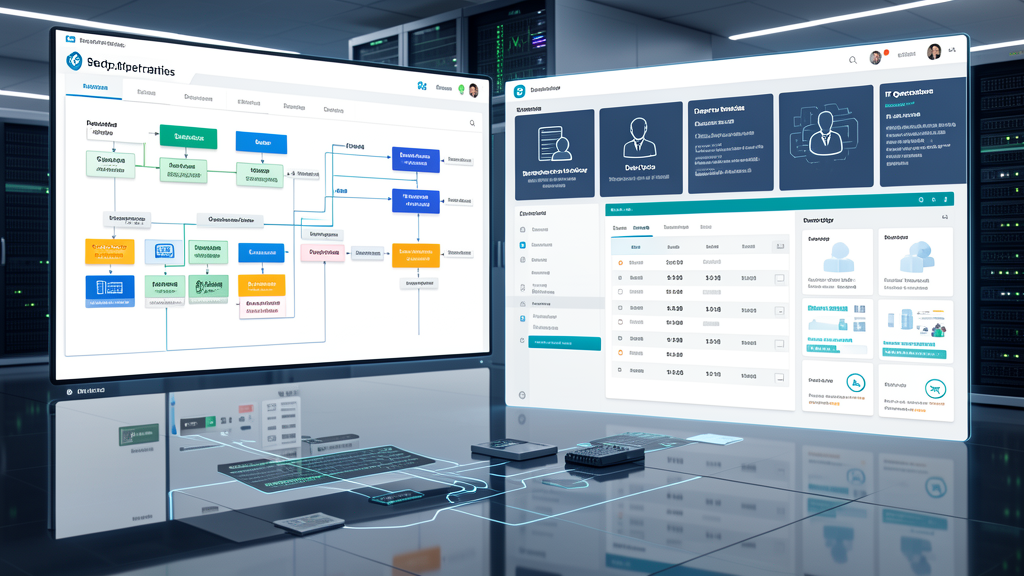
Automation is not just about issuing a certificate faster. It is about managing the full lifecycle: discovery, ownership, issuance, renewal, validation, deployment, monitoring, and exception handling. When those steps are chained together, renewal stops depending on memory or tribal knowledge.
1. Build a complete certificate inventory
You cannot automate what you cannot see. Start by mapping every public-facing and internal certificate, including those hosted by vendors or embedded in managed platforms. For each certificate, document the owner, renewal path, validation method, and dependency chain.
2. Reduce manual handoffs
The more approval steps a renewal needs, the greater the chance of delay. Use automation to route routine renewals through policy and reserve human review for exceptions, high-risk systems, or unusual validation requirements.
3. Align DNS, hosting, and application ownership
Renewal often fails because the certificate owner is not the DNS owner or the application owner. Enterprises need a governance model that clarifies who can change records, who can deploy the certificate, and who gets alerted when the process stalls.
4. Monitor certificates like production services
Certificate expiry should appear in the same operational dashboards that track uptime and incident response. Alerts need to arrive early enough to be useful, not three hours before expiry when the only solution is an emergency manual change.
Manual vs. semi-automated vs. fully automated
| Approach | What it looks like | Business risk | Enterprise fit |
|---|---|---|---|
| Manual | Tickets, calendar reminders, ad hoc validation, and last-minute deployment | Highest outage risk and highest dependency on specific people | Not sustainable for modern multi-system environments |
| Semi-automated | Alerts and templates exist, but humans still coordinate most steps | Better than manual, but still vulnerable to missed handoffs | Transitional state for many enterprises |
| Fully automated | Discovery, issuance, renewal, and deployment are policy-driven and monitored | Lowest operational risk and best auditability | Best option as certificate lifetimes keep shrinking |
Where the business case becomes obvious
Enterprises usually feel the pain first in one of three places. The first is a customer-facing site that loses trust at the exact moment a visitor is ready to convert. The second is an internal app or SSO gateway that blocks staff at the start of the business day. The third is a partner integration that fails quietly, creating a support problem before anyone connects it to certificate expiry.
These scenarios are not rare because they are technically complex. They are common because they live at the intersection of multiple teams, multiple tools, and multiple assumptions. That is exactly where automation pays for itself.
Enterprise checklist for 2026 readiness
- Create a complete inventory of public and internal certificates.
- Identify the owner for every certificate and every renewal path.
- Document DNS validation, deployment, and rollback procedures.
- Flag certificates tied to revenue, authentication, and partner integrations.
- Set renewal alerts well before the final expiration window.
- Reduce manual steps wherever policy allows.
- Test renewal in non-production environments first.
- Review vendor-managed certificates for hidden expiration risk.
- Track renewals as an operational KPI, not a clerical task.
Practical warning: the weakest part of a certificate program is usually not the CA. It is the handoff between teams. If the process depends on one person remembering what to do at the right time, the process is already fragile.
How QuickMSP can help operationalize the shift
For many enterprises, certificate automation does not happen as a standalone initiative. It is part of a broader managed security and infrastructure program that includes domain governance, monitoring, backup, and service continuity. That is where a managed services partner can help by building the inventory, tightening the renewal workflow, and putting the right alerts and controls around every critical certificate.
QuickMSP can help organizations move from reactive renewal to repeatable lifecycle management. That means fewer surprises, less manual coordination, and a more resilient operating model as certificate lifetimes continue to shrink.
Final takeaway for IT and business leaders
Shorter TLS lifetimes are not a future problem. They are a current operational signal that certificate management has outgrown the old manual model. Enterprises that treat SSL lifecycle automation as a strategic control will be better positioned for continuity, compliance, and scalability. Enterprises that wait will spend more time on emergency renewals and less time on the work that actually moves the business forward.
If your team is ready to reduce certificate risk before the next renewal window becomes a problem, QuickMSP can help you build the process, visibility, and automation to make it sustainable.