

Zero Trust for AI: Why Enterprise Agent Governance Is Becoming a Baseline in 2026
AI has moved beyond chat interfaces and into business execution. Today’s agents can read email, query CRM records, create support tickets, draft documents, open pull requests, and trigger workflows across connected systems. That shift changes the security conversation from what can the model say? to what is this agent allowed to do?
That distinction matters because an AI agent is no longer just an advisory tool. In many enterprise deployments, it behaves like a non-human user with delegated authority. Recent platform moves, including Microsoft’s Agent 365 and Zero Trust for AI guidance, show that the market is converging on a new operating assumption: AI needs its own governance layer before it can safely scale across business systems.
Why this trend is accelerating now
For the last few years, many organizations treated AI as an isolated productivity layer. That model is breaking down. Enterprises are now connecting AI to identity systems, cloud apps, document repositories, ticketing tools, and data platforms. The business case is straightforward: if an agent can gather context and execute routine work, teams move faster. The risk is equally straightforward: if an agent inherits too much access, it can act faster than your controls can respond.
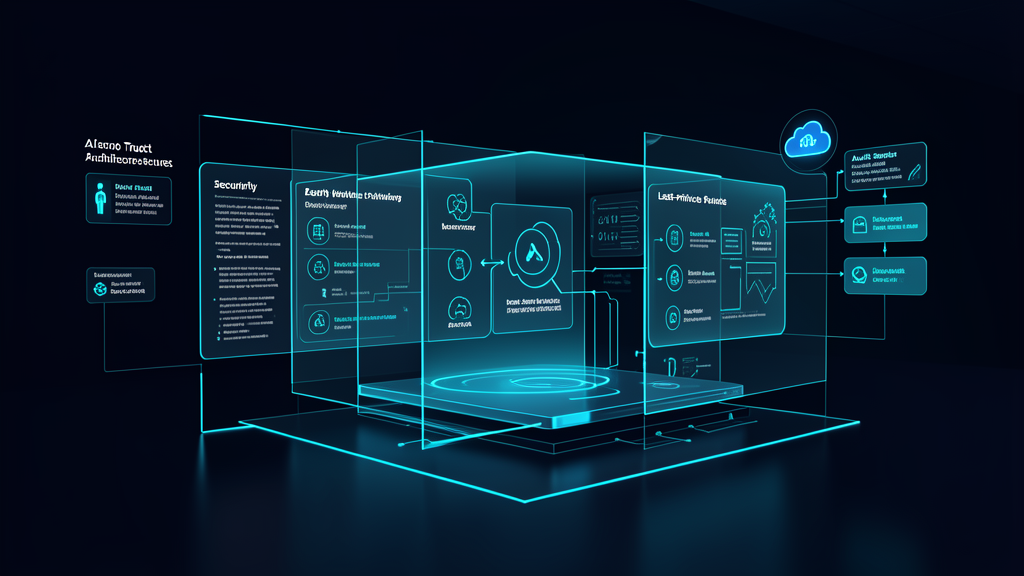
The current market shift is not simply “more AI.” It is the emergence of agentic infrastructure—the control plane that determines which agent exists, what identity it uses, which tools it can call, what data it can reach, and what approvals are required before it acts. In practice, that means AI governance is becoming a board-level operating issue, not just a security architecture concern.
- AI is becoming operational, not experimental. Agents are being wired into real workflows.
- Identity is expanding. Non-human identities now need lifecycle management and access reviews.
- Security teams need visibility. Shadow agents and hidden connectors can bypass traditional review processes.
- Compliance teams need evidence. Leaders must show who approved an agent, what it accessed, and why.
Why enterprises should care
Enterprise leaders should view AI agents through the same lens they use for privileged access, automation, and change control. The challenge is not that AI is inherently unsafe. The challenge is that AI combines three characteristics that make governance difficult: speed, scale, and delegated authority.
In a finance team, a well-intended invoice triage agent might need read access to a shared mailbox, a procurement platform, and a contract repository. In a service desk, an agent might be asked to summarize incidents, draft replies, and update tickets. In operations, an AI workflow may touch onboarding records, compliance evidence, and cloud configuration. Each use case is valuable. Each one also creates a new path for data exposure, misrouting, or accidental action if permissions are too broad.
That is why the industry is moving toward a Zero Trust for AI model. The principle is simple: verify the agent explicitly, grant only the minimum access required, and assume that an agent can be misused, misconfigured, or compromised. In other words, treat agents like privileged system participants—not like harmless productivity features.

What happens if you ignore the problem
Organizations that rush AI into production without a governance layer usually run into the same set of issues. The first is overshared access. Teams grant broad permissions so the pilot works, then never tighten the scope. The second is shadow AI: employees connect unapproved copilots or local agents to sensitive systems because the sanctioned workflow is too slow or too limited. The third is audit blindness. When an agent takes an action, the business needs to know whether that action was reviewed, approved, logged, and reversible.
| Risk area | What it looks like | Business impact |
|---|---|---|
| Over-privileged agent | One agent can read, write, and trigger across multiple systems | Greater blast radius if credentials or logic are misused |
| Shadow deployment | Business users connect AI tools without security review | Policy drift, compliance gaps, and inconsistent controls |
| Weak observability | No clear record of prompts, actions, approvals, or exceptions | Harder incident response and weaker audit evidence |
| No rollback path | Agent actions cannot be paused or reversed quickly | Operational disruption when errors propagate at machine speed |
For leadership teams, the financial risk is not limited to a bad AI output. The bigger exposure is process corruption: an AI-assisted workflow updates the wrong record, exposes the wrong document, or triggers the wrong downstream event before anyone notices. That can affect revenue, customer trust, regulatory posture, and internal control confidence all at once.
A practical governance framework for enterprise AI
The good news is that AI governance does not require a theoretical framework. It requires a disciplined operating model. Enterprises that want to scale AI responsibly should focus on five control layers.
1. Inventory every agent and connector
Start with discovery. You cannot govern what you cannot name. Build an inventory of sanctioned agents, pilot agents, third-party copilots, custom workflows, and the connectors each one uses. Classify them by business function, data sensitivity, and environment. This is the foundation for ownership and review.
2. Give each agent a real identity
Agents need lifecycle management just like employees and service accounts. Assign them clear ownership, explicit authentication, and an expiration or review cadence. If an agent has no accountable owner, it should not be in production.
3. Apply least privilege and conditional access
Access should be scoped to task, time, and environment. A support agent that drafts responses should not automatically have permission to export customer records. A finance workflow that summarizes invoices should not be able to approve payments. Conditional access, approval gates, and environment restrictions should be used to constrain both identity and behavior.
4. Limit the data and tools each agent can touch
Do not assume a broad connector list is a feature. It is usually a risk. The more systems an agent can reach, the more carefully it must be governed. Restrict access to the smallest useful set of data sources and actions. If the workflow only needs read access, block write access. If it only needs current-quarter data, do not give it historical archives by default.
5. Monitor, test, and retain a kill switch
Observability is essential. Log prompts, tool calls, approvals, exceptions, and failed actions. Periodically test what happens when access is removed or the agent is paused. Every production AI deployment should have a clear owner and a practical rollback process. If you cannot disable an agent cleanly, you do not yet have control over it.
Enterprise checklist for the next 30 days
- Identify every sanctioned AI agent, copilot, or workflow connector in use.
- Map each agent to a named business owner and technical owner.
- Review the identities, permissions, and service accounts each agent uses.
- Remove broad or inherited access that is not required for the task.
- Confirm logging is enabled for prompts, tool actions, and exceptions.
- Define an approval path for new agents and new connectors.
- Document a rollback or disablement process for each production use case.
- Align AI governance with Microsoft 365, Entra, and identity policies if those are part of your stack.
| Control area | Minimum standard | Enterprise outcome |
|---|---|---|
| Identity | Named owner and managed credentials | Accountability and lifecycle control |
| Access | Least privilege and conditional access | Reduced blast radius |
| Data | Task-specific sources and boundaries | Lower leakage risk |
| Monitoring | Action logging and review | Better incident response and auditability |
| Response | Disablement and rollback plan | Faster containment when something goes wrong |
Key takeaway: AI governance now needs the same discipline as identity governance and access control. If an agent can act on behalf of the business, it must be treated like a privileged non-human identity—not a feature toggle.
How QuickMSP helps enterprise teams operationalize the shift
QuickMSP works with organizations that need practical controls, not just AI enthusiasm. That includes aligning Microsoft 365 and Entra governance, tightening access policies, improving visibility into agent behavior, and building the operational guardrails that let teams use AI without losing control of data or process integrity.
If your organization is piloting Copilot, custom agents, or other AI workflows, now is the time to put governance in place before those tools become business-critical. QuickMSP can help you map the risk, define the control model, and build a deployment approach that supports growth without compromising security or compliance.
Ready to make AI safer for production use? Talk to QuickMSP about enterprise AI governance, identity controls, and Zero Trust planning for the agentic era.