
Deepfake phishing has moved beyond a novelty risk. In 2026, the problem is no longer just that attackers can send convincing emails. They can clone an executive voice, stage a believable video call, imitate a helpdesk agent, and use a familiar approval path to get money, access, or data released in minutes.
That shift matters because enterprises have spent years improving email filtering, MFA prompts, and security awareness, only to discover that the weakest point is often the human process around identity verification. If a finance approver trusts a voice on a call, if a service desk trusts a familiar accent and script, or if a supplier change is approved inside the same channel that delivered the request, then the organization may have modern tools but an outdated trust model.
This is why deepfake phishing is emerging as an enterprise governance issue, not just a cyber-awareness issue. The most effective response is not panic or blanket bans on AI. It is a redesign of verification, approval, and escalation workflows so that identity is checked through more than one channel and more than one signal.

What changed in the threat landscape
Deepfake-enabled attacks are attractive to criminals because they compress several steps at once: they build trust, create urgency, and exploit process gaps. An attacker no longer needs to break into a mailbox first. They can impersonate the mailbox owner, call the finance team, or join a video meeting and use the meeting itself as the proof point.
The most common enterprise scenarios now look like this:
- Executive impersonation: a cloned voice or synthetic video is used to approve a wire transfer, gift card purchase, invoice exception, or urgent procurement change.
- Helpdesk fraud: an attacker poses as an employee who “lost access” and pressures support staff into resetting MFA, changing recovery details, or exposing internal information.
- Supplier manipulation: a “new bank account” request arrives from a familiar partner, then gets reinforced by a follow-up call that sounds legitimate.
- Hybrid meeting abuse: the attacker uses a video call to create social proof, relying on the fact that many teams still equate seeing and hearing someone with trusting them.
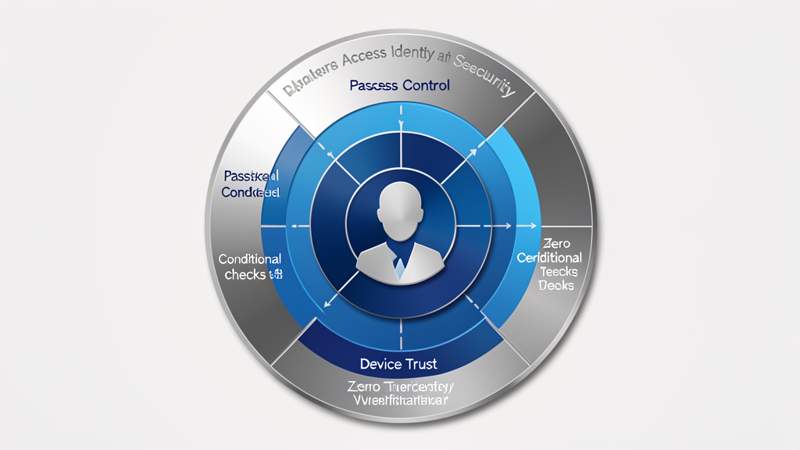
Why enterprises should care now
Enterprises are especially exposed because they run on delegated authority. Finance teams approve payments. Operations teams approve vendors. IT teams approve access. Executives approve exceptions. The more distributed the business becomes, the more likely it is that a small number of people can authorize high-value actions quickly.
That efficiency is exactly what attackers target. A convincing impersonation can create a false sense of legitimacy inside a high-trust workflow. And because many organizations have optimized for speed, not identity proof, an attacker only needs one well-timed exception to turn a synthetic conversation into a real loss.
There is also a strategic concern: a deepfake event rarely stays isolated. The immediate impact may be a fraudulent payment or access reset, but the longer-term damage can include audit findings, supplier disputes, reputational harm, and a much more expensive identity remediation effort. In regulated industries, it can also become a governance issue because the organization failed to apply stronger verification controls to high-risk transactions.
What happens if you ignore it
1. Finance becomes the softest target
Finance teams are used to urgency. That makes them efficient, but it also makes them vulnerable to a polished request that appears to come from a leader, a vendor, or a trusted partner. If the approval chain is too informal, the business may approve a fraudulent transaction before anyone questions the source.
2. The helpdesk becomes an attack multiplier
Helpdesks often have the authority to reset access quickly, and attackers know it. A cloned voice, a well-rehearsed script, and just enough context can persuade a support analyst to bypass the usual friction. Once that happens, the attacker can move from impersonation to account takeover.
3. Trust in collaboration tools erodes
If employees can no longer trust what they hear on a call or see in a meeting, collaboration slows down. Businesses then face a bad tradeoff: either they keep moving quickly and accept more risk, or they add manual verification steps that frustrate users. The answer is to build verification into the workflow, not bolt it on after the fact.
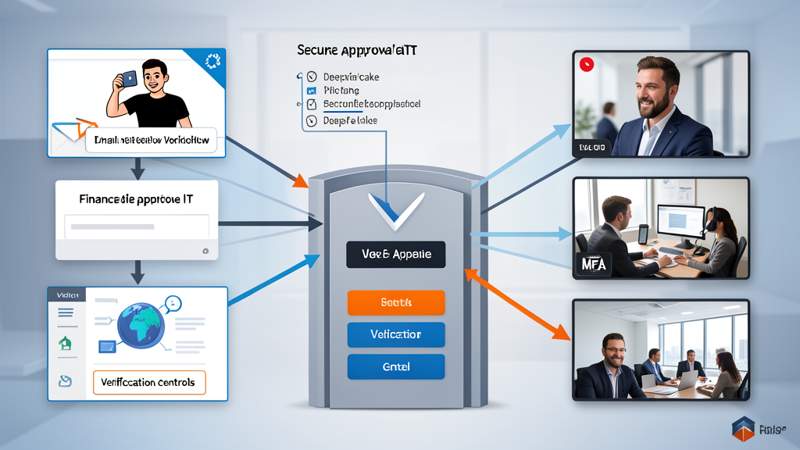
Recommended enterprise controls
The goal is not to make every employee a forensic analyst. The goal is to make high-risk actions harder to authorize through impersonation alone. The most effective controls combine identity, process, and technology.
- Require out-of-band verification for high-risk requests. Payment changes, bank detail updates, privileged access requests, and supplier exceptions should be verified through a separate channel.
- Use phishing-resistant authentication. Passkeys and other strong authentication methods reduce the value of stolen credentials and intercepted prompts.
- Separate request, approval, and execution. No single conversation should be enough to move money or change sensitive access.
- Protect the helpdesk with identity challenges. Support teams should have clear scripts, callback rules, and escalation triggers for resets and recovery changes.
- Instrument unusual approval behavior. Sudden urgency, changes in tone, odd timing, and requests to bypass process should trigger additional review.
- Train the people closest to money and access. Finance, HR, procurement, and IT support are higher-value targets than general users.
Traditional verification versus deepfake-resistant verification
| Area | Traditional approach | Enterprise-ready update |
|---|---|---|
| Approvals | One familiar email or message is enough | Secondary callback or signed workflow for high-risk actions |
| Helpdesk resets | Security questions or verbal confirmation | Identity proofing, workflow evidence, and escalation for exceptions |
| Vendor changes | Reply-to-thread trust | Independent contact verification before changes are applied |
| Authentication | Password plus prompt-based MFA | Phishing-resistant authentication and tighter privileged access controls |

Enterprise checklist for the next 30 days
- Map every workflow where money, access, or sensitive data can be approved.
- Identify which of those workflows can be completed from a single email, call, or chat message.
- Require an out-of-band callback for the highest-risk transaction types.
- Review helpdesk reset and recovery processes for impersonation exposure.
- Prioritize phishing-resistant authentication for administrators and high-value approvers.
- Update incident response playbooks to include synthetic voice, video, and social engineering.
- Test finance and support teams with realistic impersonation scenarios.
Key takeaway: The attack surface is no longer just email. Any channel that can carry trust can be abused to move money, reset access, or approve exceptions. Enterprises that want to stay ahead of deepfake phishing need verification controls that work across channels, not just inside them.
How QuickMSP helps enterprises close the gap
QuickMSP works with organizations that need practical security improvements without slowing the business to a crawl. That includes tightening Microsoft 365 and identity controls, improving secure remote access, hardening support workflows, and aligning monitoring so impersonation attempts are caught before they become operational events.
If your teams are still relying on a familiar voice, a familiar face, or a familiar thread to approve high-value actions, now is the time to modernize the verification model. Deepfake phishing is no longer a future concern. It is a current operating risk, and the enterprises that adapt fastest will be the ones that preserve both speed and trust.
Need help assessing your approval and identity workflows? QuickMSP can help you identify the weak points, close the process gaps, and build a more resilient enterprise security posture.