

Enterprise AI is no longer a purely technical conversation. In 2026, the more important question is whether an AI workload can be deployed, monitored, and audited under the right legal and operational boundary. That is why data sovereignty is moving from a compliance footnote to a procurement requirement.
Recent market signals are hard to ignore. IBM’s Sovereign Core announcement made digital sovereignty more concrete at the infrastructure level, while EU AI Act deadlines are pushing enterprises to prove how they govern high-risk AI systems. At the same time, enterprise leaders are discovering that model choice alone is not enough. Where data is stored, who can access it, which jurisdiction applies, and whether logs leave the region now matter just as much as model quality or price.
Why this trend matters now
For years, data sovereignty was often treated as a regional IT concern. A legal team would flag it, procurement would note it, and the project would move on. That approach no longer works when AI systems ingest customer records, employee data, financial documents, and internal knowledge at scale.
Three shifts are accelerating the problem:
- AI has expanded the surface area of sensitive data. Prompts, retrieved documents, transcripts, and outputs can all become governed data.
- Regulators are asking for more proof, not just policy. Enterprises need evidence of where data is processed, who sub-processes it, and how retention works.
- Vendors are packaging sovereignty as a product feature. That makes sovereignty a competitive buying criterion, not a theoretical risk discussion.
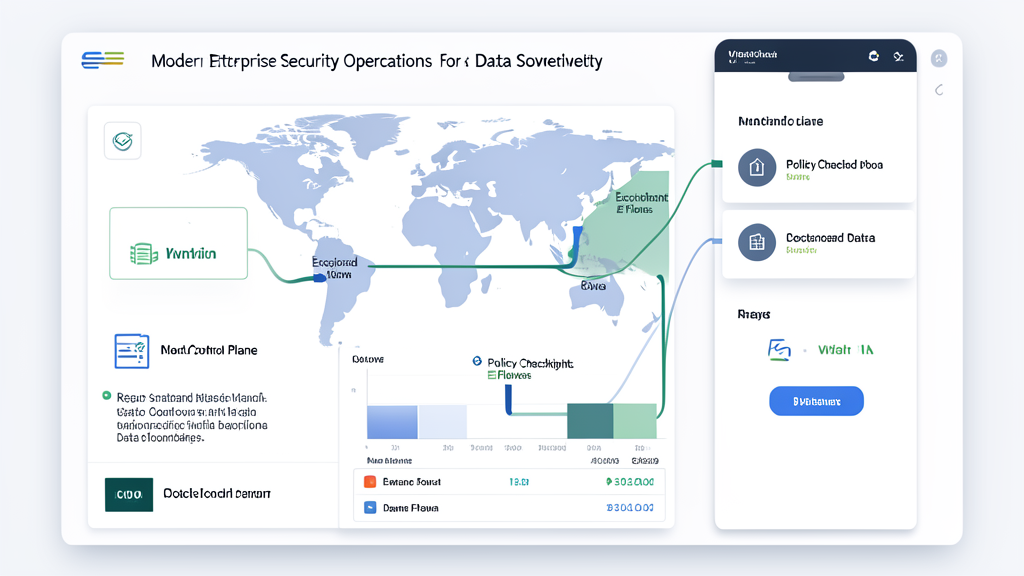
What enterprises risk if they ignore it
The obvious risk is compliance exposure, but the operational impact is broader. A company that adopts AI first and governance later can easily end up with fragmented deployments, blocked rollouts, and unhappy business teams that expected automation to be immediate.
Common failure modes include:
- Cross-border data leakage: AI tools that store prompts or retrieval results outside approved regions.
- Shadow AI procurement: business units buying SaaS copilots before security and legal teams can review residency and logging terms.
- Vendor lock-in: once workflows depend on a specific region, model, or control plane, switching becomes expensive and slow.
- Audit gaps: no defensible record of what data was used, where it was processed, and who approved the exception.
- Deployment delays: teams pause rollouts while procurement, compliance, and IT try to reconstruct the data path after the fact.
Real-world scenario: A multinational finance team wants to use an AI assistant to summarize customer interactions from several regions. The pilot works technically, but the tool routes telemetry through a shared global service and retains logs in a non-approved jurisdiction. The result is not just a security concern; it becomes a procurement and legal issue that slows the program and erodes confidence in the whole AI roadmap.
How the procurement conversation is changing
Buyers used to evaluate AI platforms on features, accuracy, and cost. Today, enterprise buyers also need to ask whether the platform can meet regional residency requirements, provide auditable controls, and support exit planning if a jurisdiction or vendor relationship changes.
| Deployment option | Strength | Tradeoff | Best fit |
|---|---|---|---|
| Public AI API | Fast adoption and low initial friction | Least control over residency and subprocessing | Low-risk content tasks and experimentation |
| Regional cloud deployment | Better data locality and policy enforcement | Requires stronger internal governance and integrations | Mid-risk enterprise workflows |
| Sovereign cloud / sovereign AI stack | Strongest control over jurisdiction, access, and evidence | Higher complexity and often higher cost | Regulated, cross-border, or mission-critical workloads |
That comparison matters because many enterprises are no longer asking whether to use AI. They are asking which AI workloads can run in which environments without creating a compliance or sovereignty exception.
Best practices for an enterprise-ready sovereignty strategy
The right response is not to block AI. It is to classify, govern, and design the rollout so the business can move quickly without creating hidden exposure.
1. Classify AI use cases by data sensitivity
Separate public content workflows from internal knowledge retrieval, regulated data processing, and customer-facing automation. The controls should increase as sensitivity increases.
2. Require a data path map before purchase
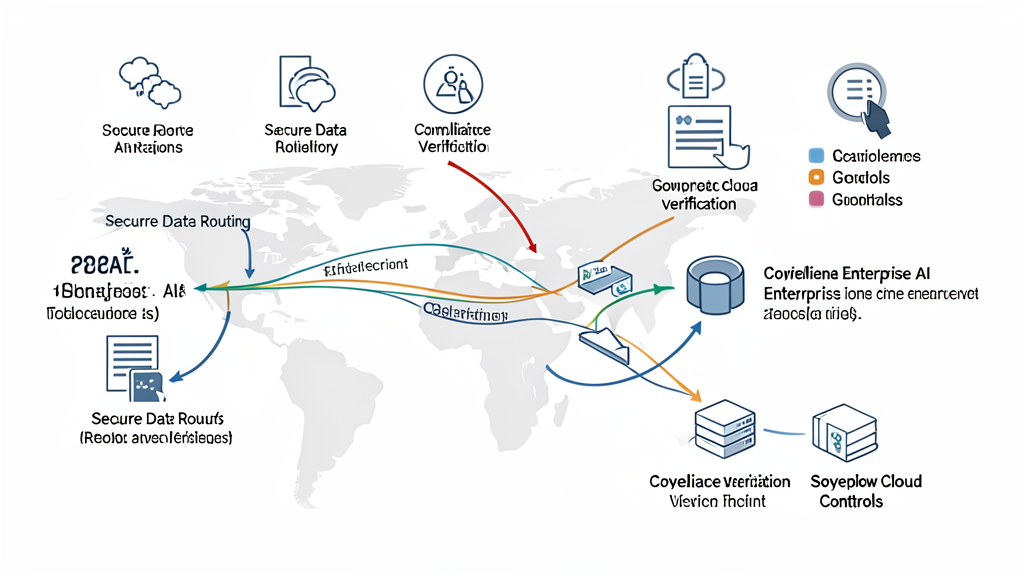
Procurement should demand a clear answer to four questions: where data is stored, where it is processed, whether prompts or outputs are retained, and which subprocessors can access it.
3. Standardize exception handling
When a business team needs an exception, document the business reason, the risk acceptance owner, the expiry date, and the rollback plan. Exceptions without an end date tend to become permanent architecture.
4. Build logging and evidence into the workflow
Continuous compliance is more than policy language. It requires records that can survive audit and board review. That means access logs, retention settings, and a repeatable process for proving control effectiveness.
5. Plan for portability from day one
A sovereign AI strategy should include exit planning. If a provider changes terms, introduces a new control plane, or expands processing outside your approved region, the business should know how to move without starting from zero.
Enterprise readiness checklist
- Identify which AI use cases touch regulated, employee, customer, or financial data.
- Map every AI vendor’s storage, processing, logging, and subprocessor footprint.
- Document jurisdiction requirements by region, business unit, and data class.
- Require legal, security, and procurement approval for sovereignty exceptions.
- Validate that logging, retention, and model usage can be audited.
- Test vendor exit paths before the system becomes business-critical.
- Review whether your current cloud and identity stack can enforce region-specific controls.
Key takeaway: Data sovereignty is no longer just about where information lives. In the AI era, it is about where data is processed, who can see it, how long it is retained, and whether the business can prove those controls at audit time.
How QuickMSP helps enterprises respond
QuickMSP helps organizations turn sovereignty concerns into practical operating controls. That includes evaluating AI and cloud workflows, tightening identity and access boundaries, improving governance around sensitive workloads, and aligning technology choices with business risk. For enterprises that want to move forward with AI without losing control of data residency or compliance requirements, that balance is the real objective.
If your team is evaluating AI tools, regional cloud changes, or compliance pressure from new sovereignty requirements, now is the time to build the guardrails before the next rollout becomes the next exception. QuickMSP can help you assess the risk, define the controls, and operationalize a rollout that stands up to business, security, and audit scrutiny.